
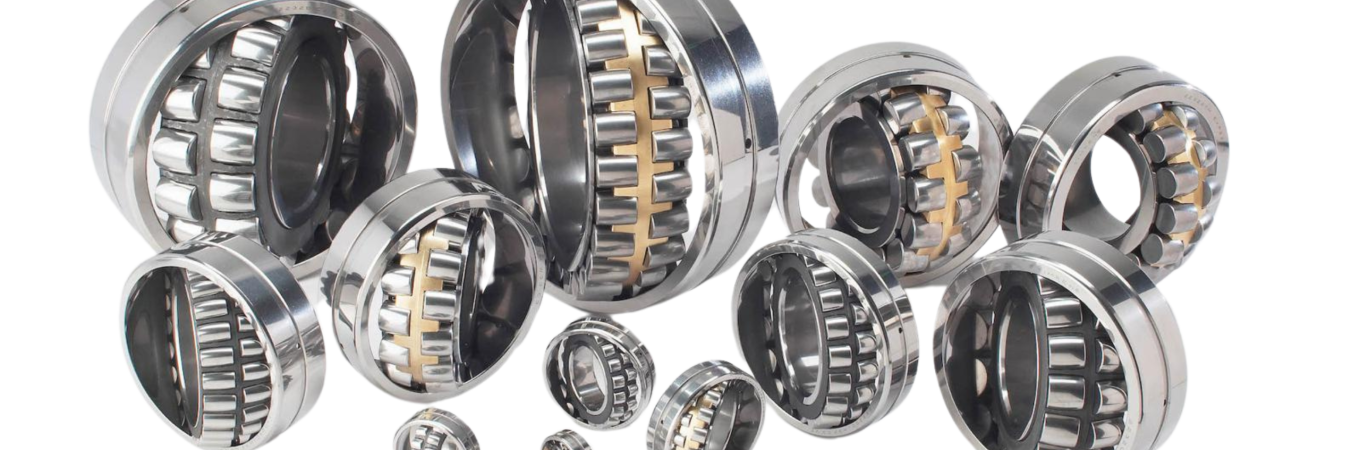
Spherical Bearings: Flexible Solutions for Misalignment and Angular Movement
Spherical bearings, also known as spherical plain bearings or ball bushings, are designed to accommodate angular motion and handle misalignment in mechanical systems. Their unique construction—a spherical inner surface that fits into a corresponding spherical outer surface—allows for multi-directional movement and flexibility, making them indispensable in applications where alignment varies or movement occurs across multiple axes. With a focus on load distribution and adaptability, spherical bearings are commonly used in automotive suspension systems, industrial machinery, heavy equipment, and other demanding environments.
Key Features of Spherical Bearings
Spherical bearings bring together specific features that enable smooth, angular movement and optimal load management in dynamic applications:
Angular Movement Accommodation: Unlike traditional bearings that primarily support linear or rotary motion, spherical bearings provide angular movement, which is crucial in applications that experience directional changes. This feature makes them ideal for pivoting components and other mechanisms requiring freedom of movement across multiple planes.
Self-Aligning Capability: Spherical bearings are engineered to compensate for misalignment. The spherical interface between the inner and outer surfaces enables the bearing to adjust to slight alignment deviations, thus preventing undue stress and wear on the bearing and connected components.
High Load-Carrying Capacity: With their robust design, spherical bearings handle heavy loads, particularly radial loads. This strength ensures that they can support substantial weight even while adjusting to misalignment, making them reliable in heavy-duty applications.
Durability and Wear Resistance: These bearings are constructed to resist wear, especially in applications that involve frequent movement and fluctuating loads. Some spherical bearings include special coatings or lubrication systems to enhance durability in harsh environments.
Low Maintenance Requirements: Spherical bearings’ design minimizes the need for frequent adjustments or alignment, reducing maintenance demands and contributing to lower operational costs over time.
Variety of Material Options: Available in steel, bronze, stainless steel, and composite materials, spherical bearings can be selected to suit specific operational environments, such as high-temperature or corrosion-prone settings.
Types of Spherical Bearings
Different types of spherical bearings are tailored for distinct applications, each offering specific benefits depending on the operating conditions:
Spherical Plain Bearings: These are the most basic type of spherical bearing, consisting of an inner and outer ring that slide smoothly against each other. They’re used in a variety of applications, such as hydraulic cylinders, construction equipment, and agricultural machinery, where they handle heavy loads and accommodate misalignment.
Spherical Roller Bearings: Designed for applications involving high radial loads, spherical roller bearings consist of an inner race, outer race, and barrel-shaped rollers. They’re ideal for high-speed and high-load environments, including mining, paper mills, and steel processing, where they maintain stability despite misalignment.
Rod Ends: Also known as heim joints or rose joints, rod ends are a type of spherical bearing with an integrated mounting arm. They’re often used in steering linkages, control rods, and other machinery where a pivoting joint is needed for precise control.
Spherical Ball Bearings: These bearings use a cage or race of spherical balls, allowing for low-friction, angular movement and high-speed operation. They’re typically used in lighter-duty applications where misalignment and speed are factors, such as electric motors and gearboxes.
Composite Spherical Bearings: Made from lightweight, corrosion-resistant materials, composite spherical bearings are suited to high-corrosion environments. They’re used in applications such as marine equipment and outdoor machinery, where traditional metal bearings would be susceptible to rust or wear.
Applications Across Various Industries
Thanks to their flexibility, strength, and resilience, spherical bearings are widely used across industries:
Automotive Suspension Systems: Spherical bearings help automotive suspension systems manage alignment and handle the constant angular motion that occurs during driving. They ensure smooth movement and durability in suspension arms, shock absorbers, and control arms, providing a comfortable ride and reducing stress on suspension components.
Heavy Machinery and Construction Equipment: In machinery such as excavators, loaders, and bulldozers, spherical bearings provide stability and strength under heavy loads and rugged conditions. They support the rotational and pivoting movements essential for handling uneven terrain and dynamic loads.
Industrial Machinery and Robotics: For industrial applications, spherical bearings are found in robotic arms, conveyor systems, and other equipment where precision and alignment are crucial. They enable smooth, controlled movement, accommodating minor misalignments and enhancing the efficiency of automated processes.
Mining and Steel Processing: Spherical bearings play a critical role in mining and steel processing, where equipment is subject to extreme loads and misalignment. Their robust construction allows them to withstand harsh conditions, minimizing downtime and ensuring efficient load handling.
Aerospace and Marine Equipment: Spherical bearings are used in aircraft landing gear, wing assemblies, and control linkages, as well as in marine applications such as propeller systems and rudders. In both sectors, these bearings endure heavy loads and frequent angular movement, providing reliability under variable conditions.
Agricultural Machinery: In equipment like tractors, plows, and harvesters, spherical bearings help maintain alignment on uneven terrain, allowing for reliable performance despite changing angles and loads.
Benefits of Using Spherical Bearings
The advantages of spherical bearings make them essential for applications requiring both flexibility and strength:
Extended Equipment Life: Spherical bearings reduce the stress on equipment components by accommodating misalignment, thereby preventing premature wear and extending the overall lifespan of machinery.
Increased Load Capacity: These bearings offer high load-bearing capabilities, handling substantial radial loads while accommodating angular adjustments. This combination makes them suitable for high-stress applications that require durability.
Smooth, Controlled Movement: The design of spherical bearings allows for smooth rotation and pivoting, which is essential in applications where angular movement and stability are important for precise operation.
Reduced Maintenance and Downtime: Spherical bearings’ ability to self-align minimizes the need for frequent adjustments and repairs. This low-maintenance aspect is particularly valuable in industries that prioritize uptime, such as mining, construction, and manufacturing.
Adaptability to Harsh Environments: With options in materials like stainless steel and composites, spherical bearings can withstand tough environmental conditions, such as exposure to dust, moisture, and high temperatures.
Enhanced Operational Efficiency: By handling misalignment and distributing loads effectively, spherical bearings improve machinery performance, reduce energy consumption, and contribute to efficient operation.
Selecting the Right Spherical Bearing
Selecting the appropriate spherical bearing depends on several factors, including load capacity, environmental conditions, movement requirements, and alignment needs. For high-load applications, spherical roller bearings provide extra durability, while lighter-duty applications may benefit from spherical plain bearings or ball bearings. In environments where corrosion or high temperatures are concerns, stainless steel or composite materials offer added protection.
Conclusion
Spherical bearings provide a versatile and durable solution for applications requiring flexibility, misalignment tolerance, and load-handling capability. With their unique design, these bearings enable smooth, angular movement while supporting high loads, making them invaluable in industries like automotive, industrial machinery, construction, and aerospace. Their ability to self-align, accommodate angular deviations, and withstand challenging conditions ensures long-lasting performance and reduced maintenance needs, contributing to the efficiency and reliability of mechanical systems across a variety of demanding applications.

Comments (3)
Richard Joash
9 September 22 4:20 amBut for me, I will stick with the car that has a CVT because it is perfect for me.
Richard Joash
9 September 22 4:21 amI’ll take if for the economy, comfort (over manual) and efficiency. ???? I think it’s also more reliable than those dual-clutch trannies found in Ford, Hyundai or Volkswagen, anyway. Besides, in our country the Philippines, standstill traffic common, and you can’t have fun driving a manual in our less-than-imperfect roads.
Diwa Alejandro Galvez
9 September 22 4:28 amI agree the overall car has a lot to do with satisfaction. How much better would a Dodge Caliber or Nissan Versa be with a 6 speed automatic instead of their CVTs? In the old ’07-11 Nissan Versa the 4 speed automatic was horribly slow and when you got cut off it would take forever to speed up again. The Versa’s CVT was much more responsive.